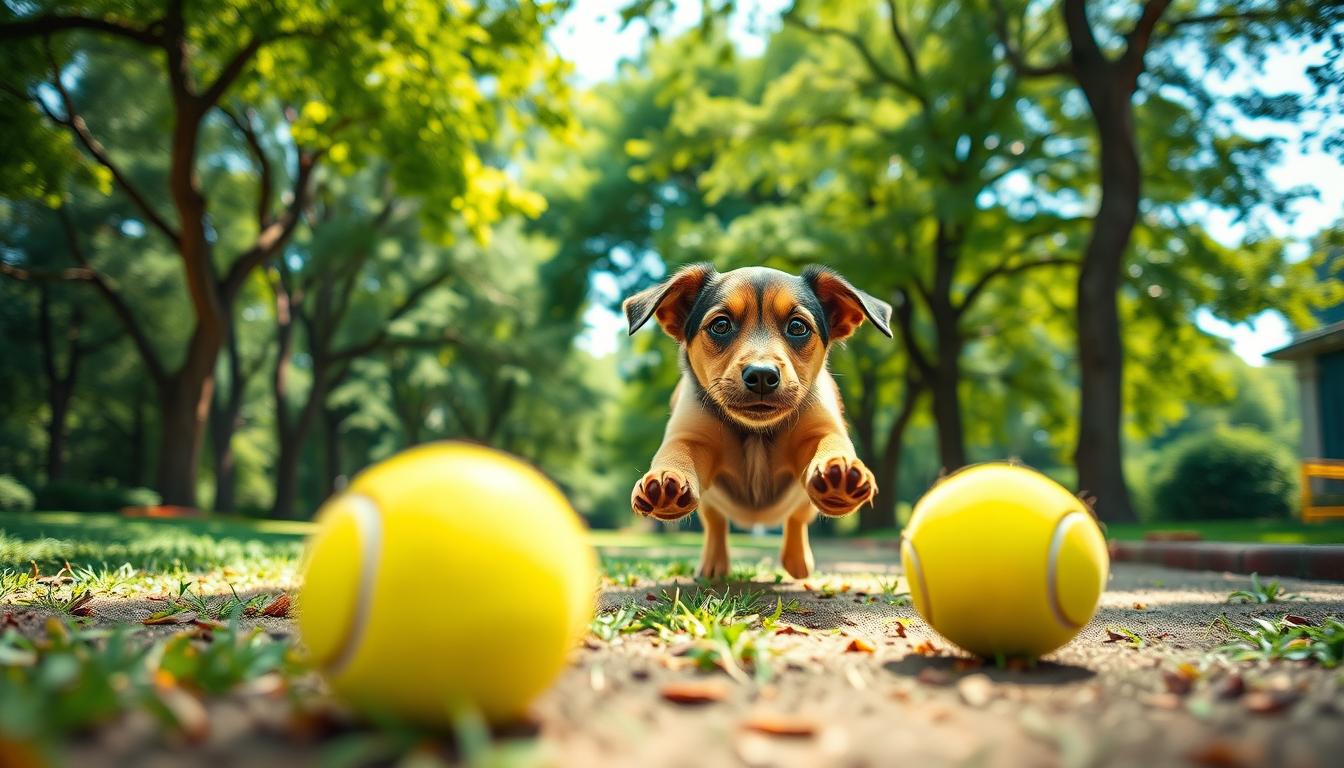
Why Do Dogs Love Tennis Balls? Did you know that about 87% of dogs go wild for tennis balls? This love for tennis balls is more than just fun. It connects dogs to their wild ancestors.
Dogs and tennis balls have a special bond. The bright yellow ball triggers their natural hunting instincts. It gives them an exciting sensory experience.
From tiny Chihuahuas to big Great Danes, all dogs love tennis balls. These balls are not just toys. They awaken a dog’s basic drives.
Key Takeaways
- Tennis balls activate deep-rooted predatory instincts in dogs
- The bright color and unpredictable movement fascinate canines
- Dogs experience significant mental and physical stimulation through tennis ball play
- Evolutionary hunting behaviors contribute to the tennis ball obsession
- Different dog breeds may exhibit varying levels of tennis ball excitement
The Evolutionary Connection: From Wolves to Tennis Ball Chasers
Dogs have a special link to their wolf ancestors. They have strong hunting instincts that make tennis balls seem like prey. This makes fetch more than just a game.

Most pet owners don’t know how deep their dogs’ connection to wolves is. Their love for chasing and retrieving comes from survival skills developed over thousands of years.
Ancestral Hunting Instincts
Wolf pack behaviors are seen in how dogs play with tennis balls. Their hunting instincts include:
- Tracking moving objects
- Stalking possible “prey”
- Capturing and retrieving
- Bringing the “catch” to their pack (or human family)
Natural Prey Drive Activation
A tennis ball sets off a dog’s hunting sequence. Its movement, color, and bounce mimic prey, triggering their evolution.
Predatory Sequence in Play
When dogs chase tennis balls, they practice ancient hunting skills. The stalking, chasing, and capturing stages are the same as wolves hunting. This makes playtime a form of instinctual training.
The Perfect Design: Why Tennis Balls Are Irresistible
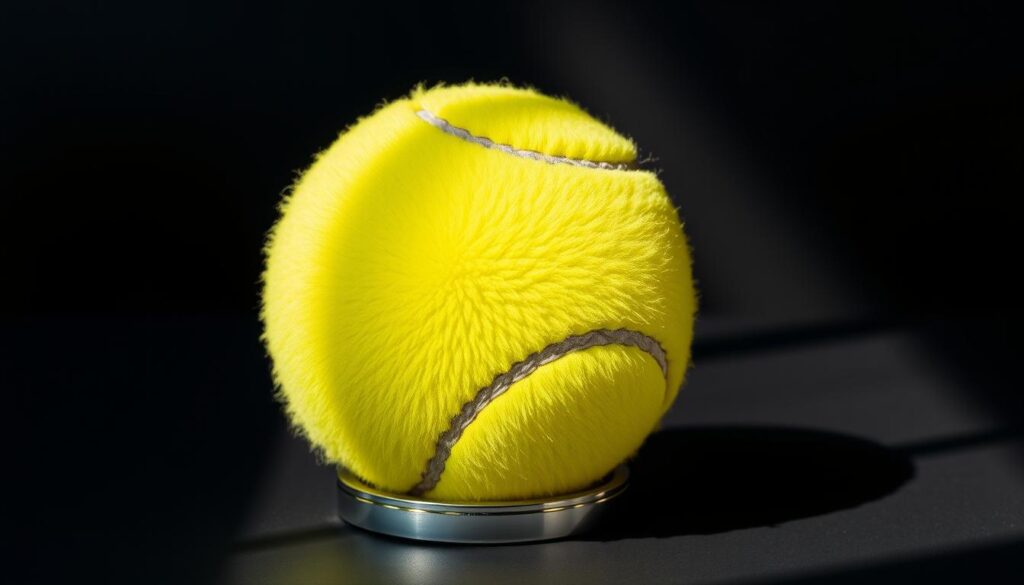
Tennis balls are a perfect mix of dog psychology and toy design. Dogs love these balls because they trigger their natural play instincts. The balls’ unique features make them irresistible.
So, why do dogs find tennis balls so appealing? It’s because of several key design elements:
- Perfect size and weight for most dog breeds
- Soft yet durable exterior texture
- Bright visibility
- Lightweight and easy to carry
The appeal of tennis balls comes from their sensory properties. Their fuzzy exterior is fun to touch. The balls are soft but can be squeezed, which dogs find very satisfying.
Different dogs like different things about tennis balls. Small dogs enjoy how light they are, while big dogs like how tough they are. Most dogs can hold them easily in their mouths.
Vets say tennis balls look like prey, which makes dogs want to chase them. The balls bounce and roll in unpredictable ways. This makes them super fun for dogs who love to play and think.
Why Do Dogs Love Tennis Balls: Understanding the Science
Dog brain chemistry shows us why dogs love tennis balls so much. It’s not just for fun. It’s a deep dive into how dogs play.
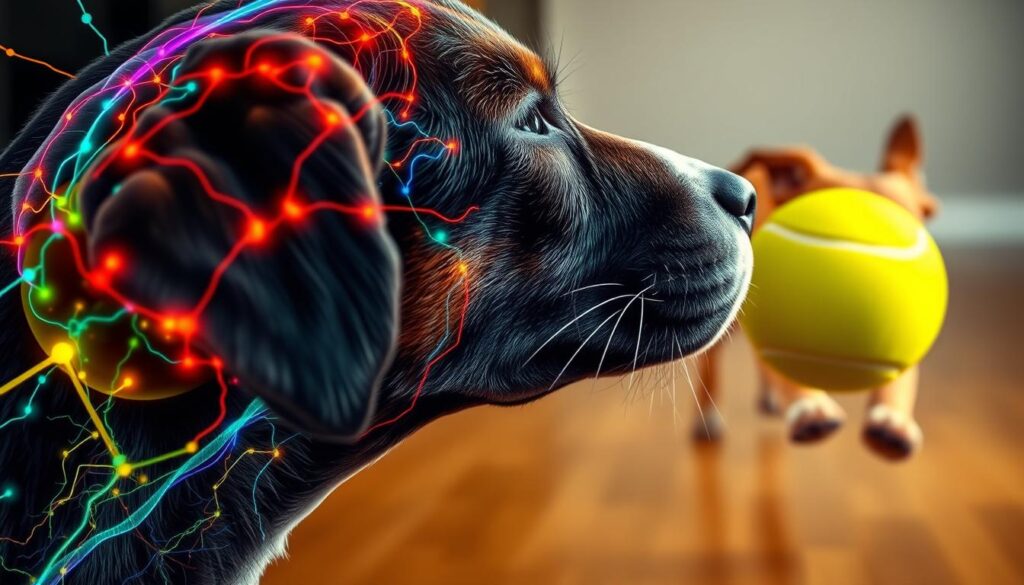
Playing with tennis balls sets off a big reaction in dogs. It turns a simple ball into something they can’t get enough of. Their brain’s reward system is key to this magic.
The Role of Dopamine
Dogs get a dopamine rush when they play with tennis balls. This chemical is linked to happiness and drive. It makes playing with tennis balls an exhilarating experience they want to repeat.
- Dopamine triggers feelings of excitement
- Reinforces enjoyable play behaviors
- Creates a positive feedback loop
Sensory Stimulation
Tennis balls offer a lot to a dog’s senses. The bright color, unique feel, and unpredictable bounce excite their senses. This makes playing with them very engaging.
Chemical Rewards in the Canine Brain
Dogs get more than dopamine from playing. They also get endorphins and serotonin. These chemicals add to the fun, making tennis balls more than just toys.
The tennis ball becomes a powerful tool of neurological satisfaction for our four-legged friends.
The Physical Properties That Drive Dogs Wild
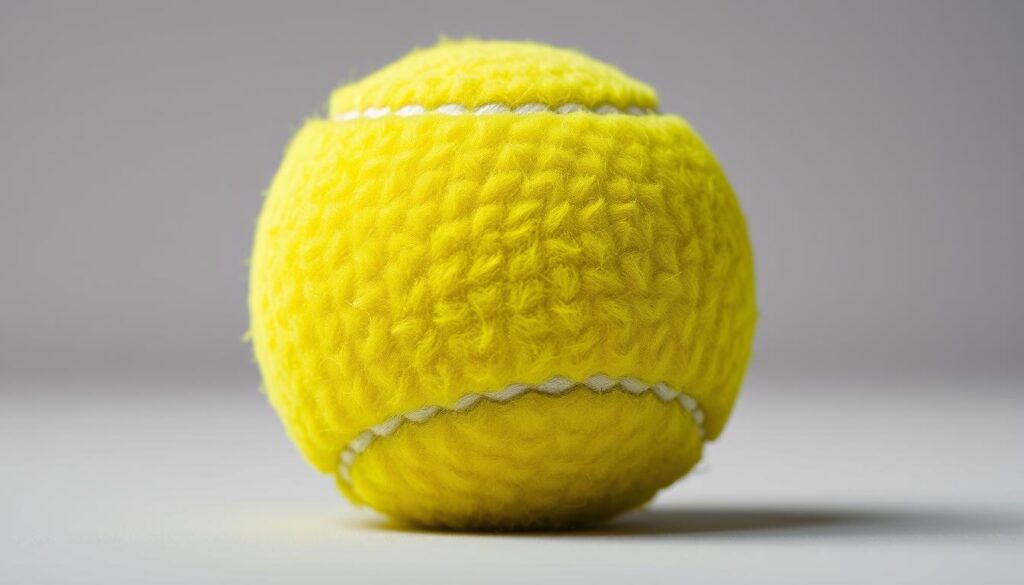
Dogs love tennis balls because of their special features. These features make tennis balls the perfect playthings for dogs. Their round shape and texture trigger a dog’s natural instincts.
The round shape of tennis balls has many benefits for dogs:
- Easy to pick up and carry
- Lightweight and portable
- Perfect size for most dog breeds
- Provides satisfying sensory feedback
The texture of tennis balls is also key. The fuzzy outside and soft inside offer just the right amount of resistance for chewing. Dogs can hold onto the ball easily, and it’s safe for their teeth.
| Physical Property | Dog Interaction | Sensory Benefit |
|---|---|---|
| Round Shape | Easy Manipulation | Mimics Prey Movement |
| Fuzzy Exterior | Comfortable Grip | Tactile Stimulation |
| Soft Core | Gentle Chewing | Dental Comfort |
Tennis balls are more than just balls. They are special dog toys that grab a dog’s attention and keep them entertained. Their unique features make them the perfect playmates for dogs.
Tennis Ball Movement and Prey Simulation
Dogs have a special bond with tennis balls that goes beyond play. The way a tennis ball moves taps into a dog’s chase instinct. It creates an experience that feels like real hunting.
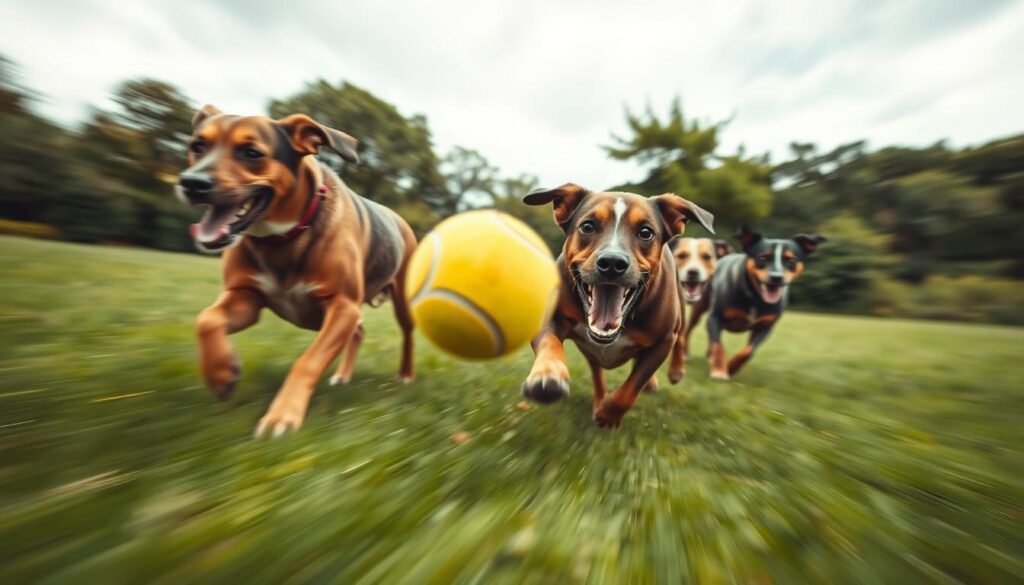
The design of tennis balls makes them move in unpredictable ways. This simulates how prey might behave. Unlike regular toys, these balls make dogs feel like they’re hunting, thanks to their erratic flight and sudden turns.
Unpredictable Bounce Patterns
Tennis balls move in a way that grabs a dog’s attention. Their unique features lead to bounces that:
- Mimic the zigzag movements of small animals
- Provide unexpected trajectory changes
- Stimulate a dog’s prey tracking instincts
Flight Path Tracking
Dogs are amazing at tracking moving things. The tennis ball’s path engages their natural hunting skills. Each throw becomes a thrilling chase.
| Ball Movement Characteristic | Hunting Instinct Trigger |
|---|---|
| Rapid Direction Change | High Prey Drive Activation |
| Unpredictable Bounce | Enhanced Tracking Response |
| Low-Altitude Trajectory | Immediate Chase Motivation |
Chase Response Triggers
The tennis ball movement awakens a dog’s chase instincts. When thrown, the ball acts as a fake prey. It makes dogs want to chase, fulfilling their hunting urge.
The Role of Color and Visibility
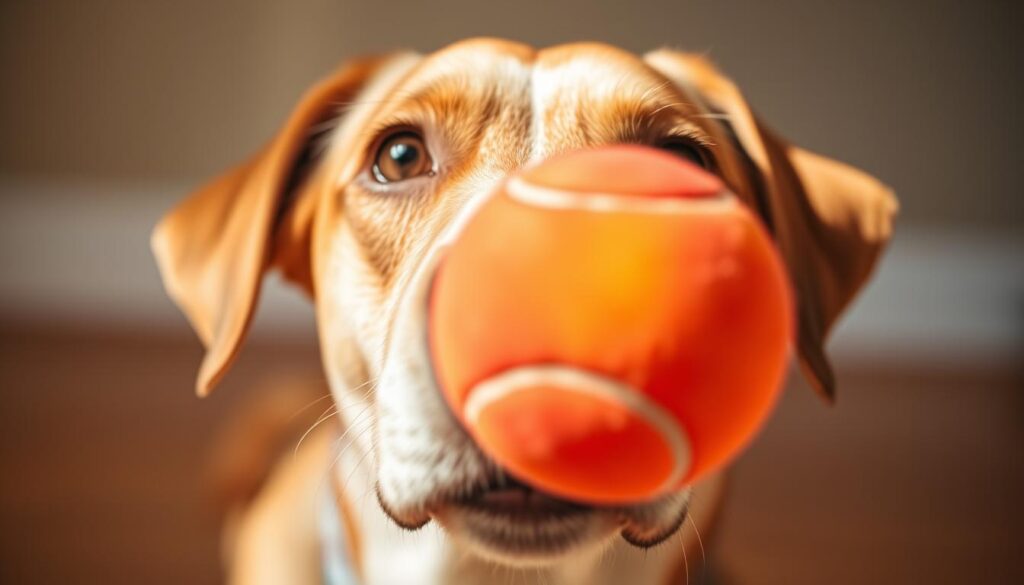
Dogs see the world in a way that’s different from humans. This is why tennis balls are so exciting for them.
Dogs can only see colors in shades of yellow and blue. This means tennis balls, which are bright yellow-green, really stand out to them. It’s this color that makes tennis balls so appealing to dogs.
- Dogs have dichromatic vision, meaning they see fewer colors than humans
- Yellow and blue colors appear most vibrant to dogs
- Tennis balls’ neon yellow-green color maximizes visibility for dogs
It’s not a coincidence that tennis balls are made in bright colors. The makers choose colors that grab a dog’s attention. The bright yellow-green color is perfect for this, making dogs want to chase it.
When a tennis ball moves, its color makes it easy for dogs to follow. This makes playing fetch more than just a game. It becomes a fun experience that satisfies their natural instincts.
The right color can transform a tennis ball from an ordinary object to an exciting plaything for dogs.
The Sensory Experience: Texture and Mouth Feel
Dogs see the world through their senses, and tennis balls are a special treat for them. The unique texture of tennis balls makes them irresistible for dogs during play.
The fuzzy outside of a tennis ball excites dogs’ senses. Their mouths explore the texture with great curiosity. This engages many sensory receptors at once.
Dental Stimulation Benefits
Chewing on tennis balls can be good for dogs’ teeth. The soft but textured surface:
- Massages their gums
- Helps remove plaque
- Provides a gentle clean
Grip and Carrying Satisfaction
Dogs love to grip and carry tennis balls. The unique texture makes it easy for them to handle. This triggers their natural instinct to retrieve.
The ball’s light weight and fuzzy surface are perfect for play. Dogs can hold it in their mouth, feeling proud and happy.
Social Bonding Through Tennis Ball Play
Tennis ball play is more than just fun. It’s a way for dogs and humans to bond deeply. It creates a special connection through excitement and shared moments.
Dogs love to play and tennis balls are perfect for that. They help build trust and understanding. Fetch games touch on important emotional and psychological levels:
- Reinforces positive communication patterns
- Develops mutual trust and respect
- Provides mental and physical stimulation
- Creates predictable interaction routines
Playing fetch makes dogs feel happy and close to their owners. The simple act of retrieving a tennis ball and receiving praise becomes a powerful bonding mechanism. It makes dogs feel loved and part of the family.
“Play is the language of connection between dogs and humans” – Canine Behavior Experts
Tennis ball play also helps dogs meet new friends. Dog parks are great places for dogs to play and learn to get along. They learn to share and interact with other dogs and people.
Exercise and Mental Stimulation Benefits
Tennis ball play is great for dogs. It combines exercise and mental challenges in one fun activity. This helps dogs stay physically fit and mentally sharp.
Dogs need more than just to run around. They also need mental challenges to keep their minds active. Tennis ball play is perfect for this.
Physical Fitness Advantages
Chasing and catching tennis balls is a great workout for dogs. It helps them:
- Strengthen their muscles
- Get their heart rate up
- Keep a healthy weight
- Improve their coordination
Cognitive Development Through Play
Tennis ball play is not just about moving around. It also challenges a dog’s brain in many ways.
“Play is often talked about as if it were a relief from serious learning. But for children and dogs, play is serious learning.” – Unknown
When dogs play with tennis balls, they solve complex problems. They track the ball’s path, predict where it will go, plan how to catch it, and understand space.
Playing with tennis balls regularly can make dogs happier and more balanced. It helps prevent boredom-related problems.
Breed-Specific Tennis Ball Preferences
Not all dogs love tennis balls the same way. Their breed traits affect how they play with these toys. Some breeds find tennis balls super exciting.
Retrieving breeds like Labradors and Golden Retrievers love tennis balls the most. Their genes make them great at hunting and fetching. They show:
- High energy during ball chasing
- Exceptional tracking skills
- Natural retrieval instincts
Herding breeds like Border Collies and Australian Shepherds also love tennis balls. Their traits make them track and control the ball. This turns play into a fun challenge for their minds.
| Breed Group | Tennis Ball Interaction | Play Intensity |
|---|---|---|
| Retrievers | Fetch and Return | Very High |
| Herding Breeds | Track and Control | High |
| Terriers | Aggressive Chewing | Medium |
| Companion Breeds | Limited Interest | Low |
Knowing your dog’s breed can help pick the best play style and toys. While each dog is unique, breed traits offer clues to their tennis ball preferences.
The Psychology of Tennis Ball Obsession
Dog psychology shows us why dogs love tennis balls so much. These simple objects tap into their deep instincts and emotions.
Dogs and tennis balls have a special bond. This bond comes from positive reinforcement and emotional ties. When dogs feel happy and praised while playing, they form strong mental bonds.
- Positive play experiences build strong emotional connections
- Repetitive interactions create predictable excitement patterns
- Tennis balls represent more than just a toy – they symbolize interaction and bonding
Some dogs get so attached to tennis balls. This is due to several psychological reasons:
- Anticipation of play releases dopamine
- Predictable reward cycles reinforce behavior
- Physical and mental stimulation provide complete satisfaction
Knowing these reasons helps pet owners manage their dogs’ behavior. By balancing play and controlling tennis ball use, we can keep playtime fun and healthy.
Conclusion
Tennis balls are more than just toys for dogs. They connect with deep instincts, giving dogs a rich sensory experience. This play strengthens the bond between dogs and their owners.
Exploring why dogs love tennis balls shows how biology, brain chemistry, and social ties work together. Each time a dog plays with a ball, it’s a complex experience. It turns a simple ball into a source of joy and mental challenge.
Playing with tennis balls helps dogs and owners connect on a deeper level. Whether it’s chasing the ball or playing fetch, they share special moments. These moments are more than just fun; they’re about building a strong relationship.
The tennis ball is a link to a dog’s wild past and their life today. It shows their ability to connect, learn, and have fun. By understanding this, dog owners can use tennis balls to improve physical health, mental skills, and emotional ties.

1 thought on “Why Do Dogs Love Tennis Balls? The Science Behind the Obsession 2025”